
Dr Maré Du Plessis diagnoses and treats anal fistula for which there are a range of anal fistula procedures and operations, most commonly a fistulectomy.
What is an anal fistula?
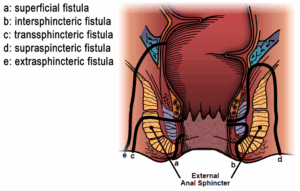
image credit: www.fascrs.org
An anal fistula is a small tunnel that forms between the end of the bowel and the skin near the anus. It can cause pain, bleeding, and discharge during bowel movements. Sometimes, the fistula constantly drains fluid, while in other cases, if the outer opening closes up, it can lead to repeated anal abscesses. Surgery is almost always the only way to completely treat an anal fistula.
How do you get an anal fistula?
An anal fistula typically forms when an infection in the anal glands leads to an abscess that doesn’t fully heal, and other underlying health conditions like Crohn’s disease, injury, or certain infections can contribute. It can also occur after surgery to drain an anal abscess.
How do I prevent an anal fistula?
Anal fistulas can’t always be prevented, but there are ways to lower your risk. Treating anal abscesses early is important, as most fistulas start this way. Keeping the anal area clean and dry helps prevent infection, and managing conditions like Crohn’s disease can reduce your chances of developing a fistula.
Eating a high-fibre diet, drinking enough water, and staying active can also help prevent constipation and straining during bowel movements, which puts less pressure on the area. If you notice pain, swelling, or discharge near the anus, it’s best to see a doctor early to avoid complications.
What are the symptoms of an anal fistula?
- Pain, which is usually constant, throbbing, and worse when sitting down
- Swelling, redness and tenderness around the anus
- Discharge of pus or blood
- Pain associated with bowel movements
- Fever
How will I know if I have an anal fistula?
Usually, if you have the above symptoms and go to your doctor, they will do a digital rectal exam and then diagnose the anal fistula. You may require additional tests to screen for sexually transmitted infections, inflammatory bowel disease (Chron’s disease), diverticular disease or rectal cancer.
In rare cases, an examination may be done under anaesthesia. The doctor may also arrange for an ultrasound, a CT scan or an MRI to be done.
Will I need surgery if I have an anal fistula?
Surgery is the most effective way of dealing with an anal fistula, and is almost always required.
The type of anal fistula operation you will have depends on where the anal fistula is, but the most common procedure is called a fistulectomy. This is done in most cases and involves opening up the full length of the fistula so it can be cleaned out. It usually heals within one to two months, leaving a flat scar.
Read about other surgical options for anal fistula here